
Relocating to Eielson AFB, AK: What You Need to Know
Relocation to Eielson Air Force Base involves more than a new assignment; it brings a shift into Interior Alaska’s extreme climate and unique logistics. According to U.S. Census Bureau QuickFacts, Fairbanks North Star Borough hosts roughly 95,000 residents as of 2023, spread across vast distances. That population level supports essential services, but not the nonstop amenities common in larger cities. Understanding housing, schools, transportation, and seasonal realities in this Eielson AFB relocation guide helps military households and civilian employees arrive prepared rather than surprised.
How is Eielson AFB situated within Interior Alaska?
Eielson Air Force Base lies about 26 miles southeast of Fairbanks along the Richardson Highway. The installation itself spans thousands of acres bordering the Tanana River and broad stretches of boreal forest. According to the official Eielson AFB site, the base sits roughly 6 miles south of North Pole, placing service members within reach of Santa Claus House, the North Pole Safeway on Santa Claus Lane, and essential services near Badger Road. Fort Wainwright rests to the northwest, creating a regional military corridor.
Surrounding communities such as Moose Creek, Salcha, and the city of North Pole provide off-base housing options along roads like Dennis Road, Nordale Road, and Bradway Road. The Chena River and Tanana River weave through the region, influencing local recreation and floodplain considerations. Interior Alaska’s setting means long distances between population centers, so trips to the Fred Meyer on Old Steese Highway or the Walmart on Johansen Expressway often become planned weekly events rather than spontaneous runs.
Winters shape daily life. According to climate summaries from the National Weather Service Fairbanks, average January lows near Fairbanks often fall below -10°F, with extremes dropping past -40°F. Summer brings almost 22 hours of daylight near solstice, moderating temperatures into the 60s and 70s. That intense seasonal swing affects everything from vehicle maintenance to outdoor routines on base and in nearby neighborhoods.
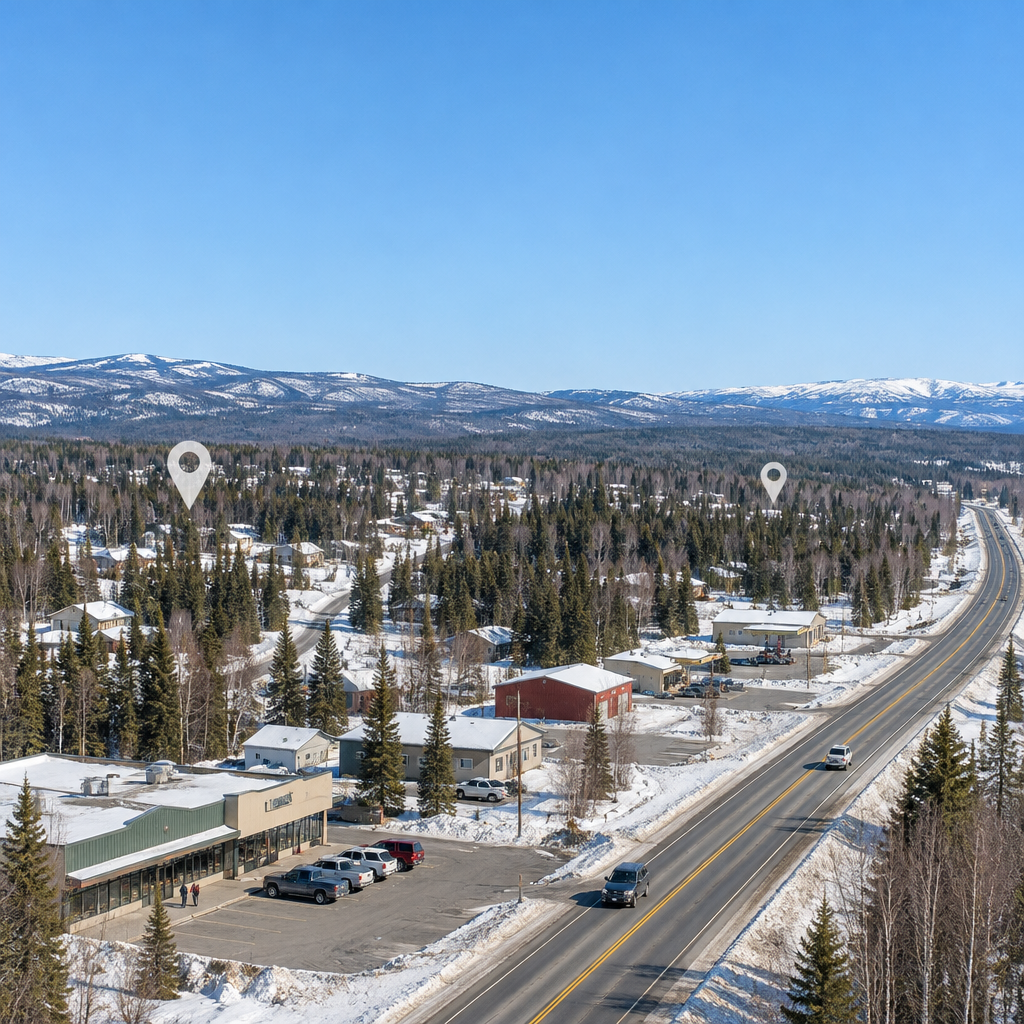
On clear winter nights along the Richardson Highway near Moose Creek, the sky often glows with green curtains of aurora above dark spruce silhouettes. The snowpack reflects distant base floodlights, creating a faint silver sheen over parked trucks in the North Pole High School lot. The quiet is broken only by the hum of block heaters and the occasional crunch of boots on packed snow, while the sharp, dry air carries a faint scent of wood smoke from homes along Hurst Road.
What should relocating households know about housing and BAH near Eielson?
Housing decisions often start with Basic Allowance for Housing calculations. According to the Defense Travel Management Office’s BAH tables, allowance rates for the Fairbanks area as of 2024 vary by rank and dependency status but commonly range between roughly $2,100 and $2,700 for many enlisted and junior officer categories. That span influences choices between on-base housing in Eielson’s neighborhoods and off-base rentals in North Pole or along the Badger Road corridor.
On-base housing reduces commute stress in severe weather and simplifies access to the Eielson Exchange, the Commissary, and Crawford Elementary School. Off-base options in North Pole, Moose Creek, and Salcha include single-family homes, townhomes, and some apartments along Repp Road and Plack Road. According to listings data summarized by the Greater Fairbanks Board of Realtors, inventory across Fairbanks North Star Borough often fluctuates around a few hundred active residential listings, with winter months sometimes showing 20% fewer choices.
Rental pricing reflects both BAH rates and seasonal pressures. Landlords near Eielson frequently align monthly rents so that a three-bedroom home in North Pole might fall between $1,900 and $2,400, while more rural Salcha properties with acreage can climb higher if they include large heated garages. Properties along Dennis Road or Dawson Road with efficient heating systems and reliable fuel storage command premiums because consistent warmth at -30°F becomes a nonnegotiable safety factor rather than a luxury feature.
How do schools and childcare options work for Eielson families?
Eielson-area students fall under the Fairbanks North Star Borough School District. On base, Crawford Elementary serves many younger children, while Ben Eielson Jr/Sr High School supports grades seven through twelve. According to GreatSchools, Ben Eielson Jr/Sr High enrolls several hundred students and achieves solid academic and college readiness indicators relative to statewide benchmarks. Off base, families might also connect with North Pole Elementary, North Pole Middle School, and North Pole High School along Snowman Lane and 8th Avenue.
The district details attendance boundaries and transportation logistics on the official Fairbanks North Star Borough School District website, which outlines bus routes serving areas such as Moose Creek and Badger Road. That information matters because winter temperatures and road conditions can extend bus rides. Childcare options include on-base Child Development Centers, family child care homes, and civilian providers in North Pole near the Safeway complex, daycare centers along Badger Road, and after-school programs connected to Crawford Elementary and Ben Eielson Jr/Sr High.
On autumn afternoons behind Ben Eielson Jr/Sr High School, the football field often echoes with whistles, shouts, and the rhythmic thud of practice drills, while the scent of damp leaves rises from the bordering birch trees. Inside the gym, the squeak of sneakers from volleyball practice mixes with the low buzz of fluorescent lights. Students spill out toward the parking lot along French Creek Drive, breath forming quick clouds in the cool air as the sky shifts to deep orange over the distant Tanana River flats.
What transportation, commuting, and daily logistics factors stand out?
Daily life near Eielson relies heavily on personal vehicles. There is no dense public transit network comparable to larger metropolitan areas. The Richardson Highway functions as the primary commuting artery, linking Eielson with North Pole in roughly 10 to 15 minutes and Fairbanks in 30 to 40 minutes under typical conditions. According to the installation overview on Military OneSource, winter driving requires block heaters, engine warm-up time, and regular maintenance.
Gas stations cluster around North Pole’s Old Richardson Highway, Santa Claus Lane, and Badger Road, with additional options along Airport Way in Fairbanks near the Bentley Mall. The Fairbanks International Airport, about 35 miles from Eielson, offers commercial flights, while the smaller Allen Army Airfield near Delta Junction primarily supports military operations. Trips to larger medical facilities, such as Fairbanks Memorial Hospital on Peger Road, require planning for road conditions and potential ice fog, which can reduce visibility to a few hundred feet.
Winter also dictates scheduling for grocery runs and recreation. Many households consolidate errands in Fairbanks, visiting Fred Meyer, Costco on Merhar Avenue, and the Bentley Mall in a single trip. According to guidance from the National Weather Service Fairbanks, wind chill values can plunge below -50°F, so limiting time outside heated vehicles becomes essential. Even simple tasks such as fueling at the Tesoro station in North Pole or loading supplies from the Eielson Commissary may require gloves, face coverings, and layered clothing.
What lifestyle, recreation, and seasonal adjustments are common?
Despite harsh temperatures, Interior Alaska offers rich outdoor recreation. Chena Hot Springs Resort, about 60 miles northeast of Fairbanks along Chena Hot Springs Road, provides year-round soaking pools and frequent aurora viewing opportunities. Pioneer Park on Airport Way, Creamer’s Field Migratory Waterfowl Refuge, and the Chena Riverwalk add summer activities closer to Fairbanks. On base, the Iceman Falls Lodge area and outdoor recreation center support skiing, snowshoeing, and equipment rentals that help newcomers adapt to extended snow seasons lasting more than 6 months.
Seasonal light patterns demand adjustment. According to the National Weather Service Fairbanks, midwinter days may offer barely 4 hours of direct sunlight, while late June approaches 22 hours of usable daylight. Many households install blackout curtains in homes along streets like Porcupine Drive or Cougar Avenue to protect sleep during summer, then add full-spectrum lamps and reflective snow shoveling routines during winter to combat darkness. The Eielson AFB fitness center and indoor tracks provide crucial outlets when outdoor conditions turn severe.
Community hubs include the Santa Claus House in North Pole, the North Pole Plaza Mall, and restaurants along Santa Claus Lane serving reindeer sausage, halibut, and hearty soups suited to subzero evenings. On base, chapels, youth centers, and hobby shops host events that build connections among residents arriving from lower-48 installations. The combination of tight-knit installation activities and regional attractions along the Chena River and Richardson Highway helps offset geographic isolation and long flights to major urban centers.
How can newcomers prepare financially and logistically for an Eielson move?
Preparation begins with detailed budgeting that considers heating fuel, winter gear, and vehicle readiness. According to Fairbanks North Star Borough data summarized by the U.S. Census Bureau, median household income in the borough hovers around $88,000, reflecting both higher Alaska wages and elevated living costs. Heating oil or propane expenses for homes near Salcha, Moose Creek, or Badger Road can add several hundred dollars per month in the coldest 4 to 5 months, especially for larger properties.
Vehicle preparation often includes installing engine block heaters, battery warmers, and oil rated for extreme cold. According to winter-driving guidance on Eielson AFB, motorists should carry survival kits including blankets, high-calorie snacks, and spare gloves in case of breakdowns along the Richardson Highway. Investment in quality winter tires for at least 2 vehicles can easily exceed $1,000, but traction on ice and packed snow significantly reduces accident risk during commutes to North Pole or Fairbanks.
Household goods shipment planning should account for potential delays in peak PCS periods. Many relocating households schedule temporary lodging either on base or in hotels along the Old Richardson Highway corridor in North Pole. According to installation support information on Military OneSource, early contact with housing and transportation offices at least 60 days before arrival improves coordination for both on-base housing and off-base rental searches, particularly when balancing school enrollment at Crawford Elementary or Ben Eielson Jr/Sr High.
The 95,000-resident figure cited at the start of this guide reflects a community large enough to sustain key services yet small enough that inventory, appointments, and resources tighten quickly. That population level from the opening underscores how limited housing and school capacity can feel during peak PCS months. The Greater Fairbanks Board of Realtors market reports provide an overview of active listings and seasonal shifts in Fairbanks North Star Borough. Service members and civilian employees who register listing alerts, schedule in-person or virtual tours within 48 hours of promising properties hitting the market, and secure lease or purchase commitments before the late August PCS surge generally obtain better housing matches and avoid higher late-season competition.
FROM OUR BLOG

Essential Tips for First-Time Homebuyers in Fairbanks, AK
Essential Tips for First-Time Homebuyers in Fairbanks, AK First-time buyers in Fairbanks face unique conditions, from subarctic winters to a strong military and university presence. According to U.S. Census QuickFacts, the homeownership rate in Fairbanks hovers near 47% as of 2022, noticeably lower

Exploring Luxury Real Estate in Salcha, AK: Market Trends & Opportunities
Exploring Luxury Real Estate in Salcha, AK: Market Trends & Opportunities The luxury segment in Salcha, Alaska, combines large riverfront parcels, custom log homes, and striking mountain vistas. According to U.S. Census data summarized by Wikipedia, the Salcha census-designated place recorded a popu